
Your clothes say less about you than the quizzes promise and more than you would like. The label records one decision, made once, possibly by somebody else. The wear records what you do with the garment every day after that. I read the wear. I treat the label as hearsay.
Most of what is written on this subject is a horoscope with a dress code. Black means mysterious, red means confident, a hoodie means you have stopped trying. None of it would survive a minute of cross-examination, because a colour is a choice, and a choice can be made for a hundred reasons, most of them dull. A pale strip worn into the inside edge of a bag strap is not a choice. It is a record, and records can be read. That is the whole of the method. The rest of this note is practice, and the question under each day's photograph is the examination.
Three questions for any garment
Ask three things, in order, and do not skip the third. What is it. What has happened to it. What would look different if my reading were wrong. The first is a noun. The second is the evidence. The third keeps you honest, because it makes you say which state of the same object would refute you, and a reading that nothing could refute is not a reading. It is a mood.
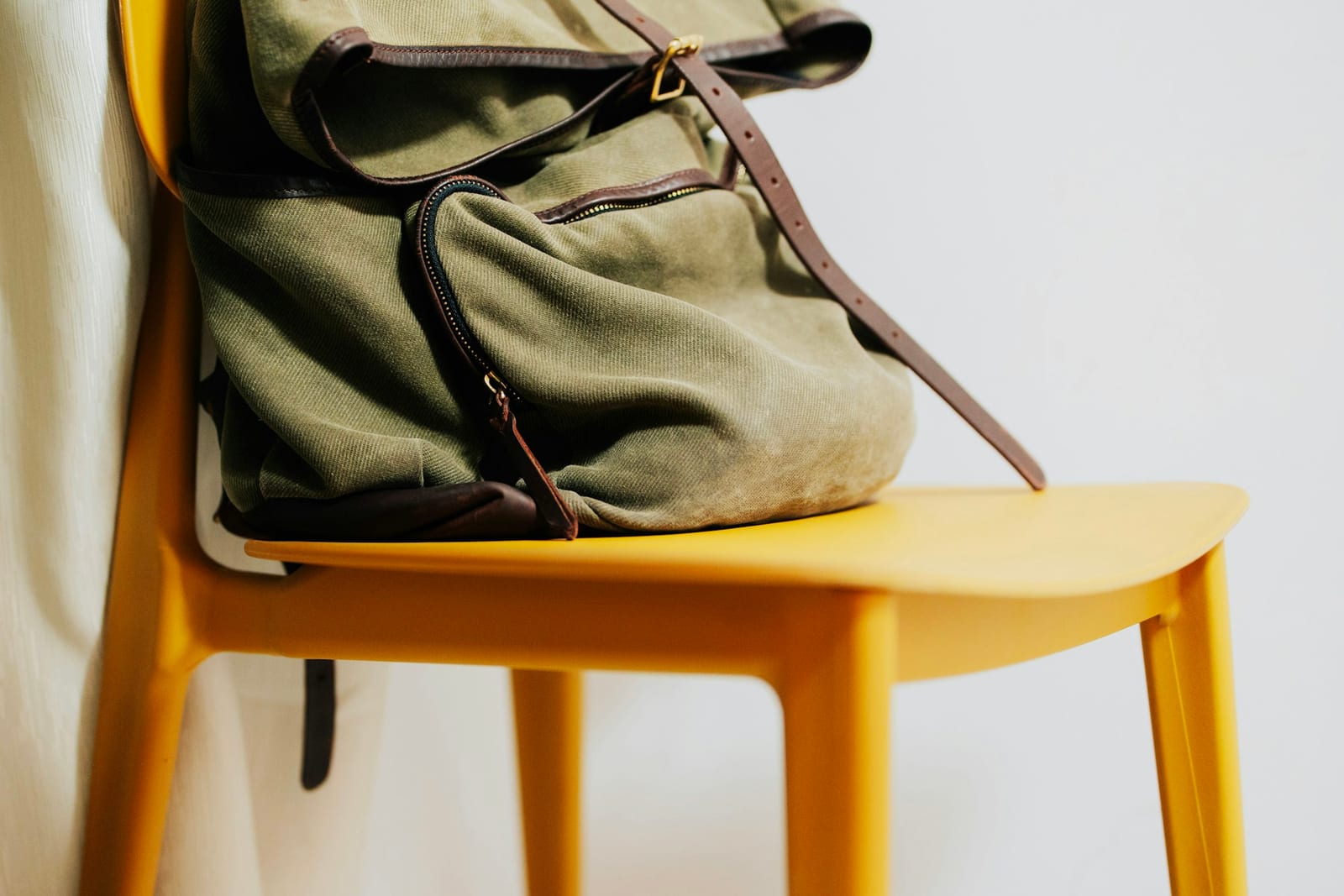
Take the bag above. What is it: a canvas rucksack with leather straps and a buckled flap. What has happened to it: the canvas along the bottom edge has rubbed pale and dusty, the part that meets the floor, while the flap above it is still a good deep green. The pale edge is friction, cloth against floors and chair seats, again and again. So: set down often, on hard surfaces, and a bag in regular use. What would refute me: an even paleness all over, which would be sun or the washing machine rather than floors. Neither is the case, and I go no further. The photograph does not say which shoulder it rides on or where it goes, and a bag that has been set down a great deal has been set down by someone who put it down, nothing more.
Sleeves, cuffs and the hand that works
Doyle has a case, A Case of Identity, in which a woman is read from her sleeves before she has sat down: the plush worn through on both forearms a little above the wrist, where a typist rests against the edge of the desk, and two small dents either side of her nose from a pince-nez. Sleeves have not changed since. A jumper pilled and shiny on the underside of the right forearm, and only the right, has been dragged across a desk by a right-handed person for months. A pale rectangle worn into one front pocket of a pair of jeans is a phone, and the pocket it lives in tells you which hand reaches for it. The inside of a shirt collar gone dark at the back has been worn many times between washes, or a few times by someone with long days. I cannot tell those two apart, so I do not try.
Jobs leave their own marks, and they are the best evidence cloth carries, because nobody chooses them. Small healed burns along the inside of a forearm, at oven-shelf height. Flecks of emulsion on a watch strap and on the frames of a pair of glasses: a painter, or someone who painted a bedroom at the weekend, and the age of the flecks settles it, since fresh paint sits on top of the strap and old paint has worn into it. Knees of work trousers gone through at the front and not the sides: kneeling, which is tilers, plumbers, gardeners and anyone who has spent a week laying a floor. Each of these has an innocent explanation. Your job is to name the innocent one and then look for the second mark that rules it out. One mark is a rumour. Two that agree are a reading.
Fading is a clock
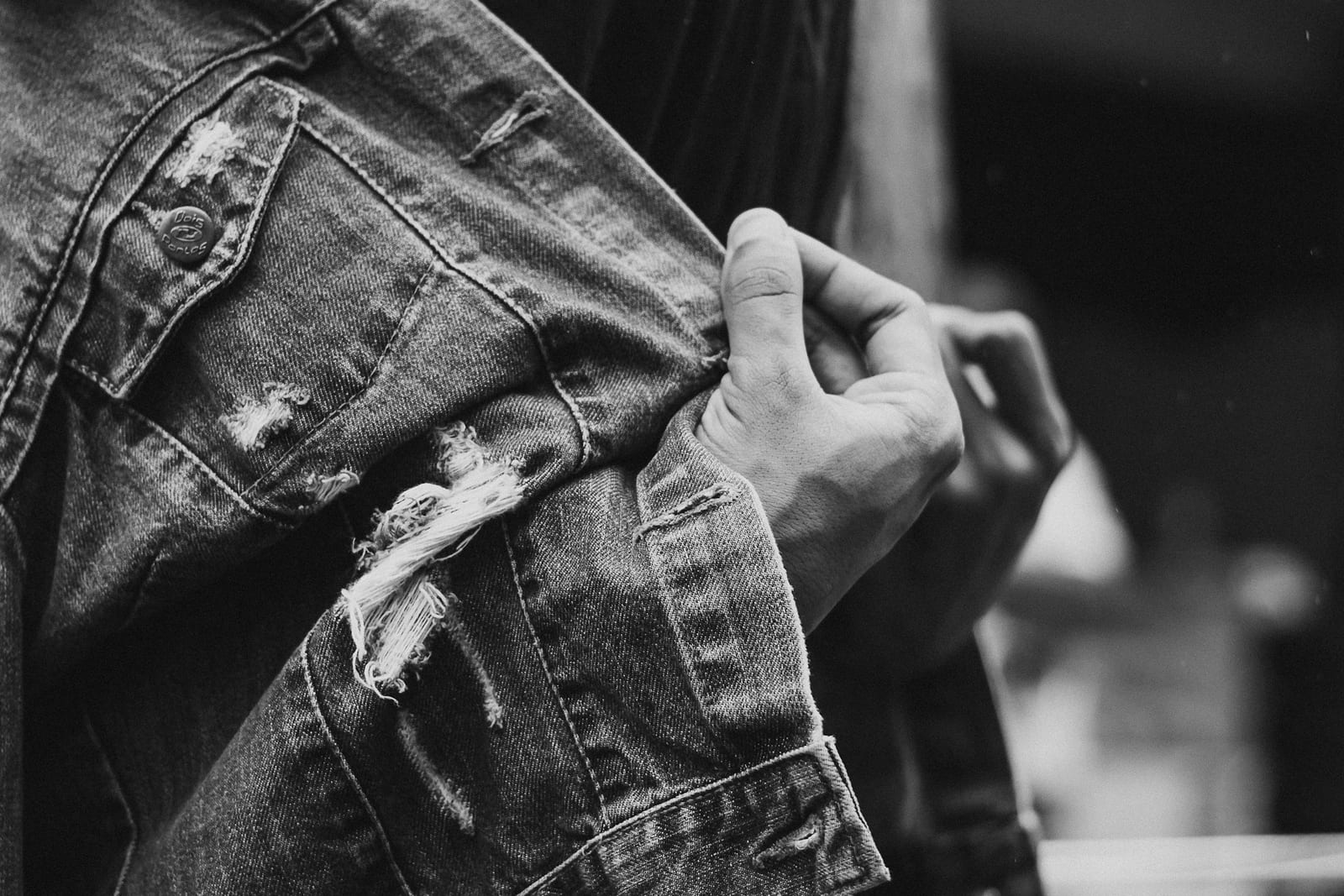
Dye does not leave a garment evenly. It goes where the cloth bends and where the sun lands. Jeans fade first at the hips and behind the knees, in the creases, because indigo sits on the surface of the thread and rubs off at every fold. A black T-shirt goes grey along the seams and the collar before the body, because the seams take the friction in the wash. A cap fades on top and stays dark under the peak, and the underside is your control sample: hold the two together and you can see how much sun the crown has had.
Sun fades one side of a thing. A jacket faded on the left shoulder and not the right has been worn in a car with the window on the left, which in Britain is the passenger seat and in most of the world the driver's. A shirt faded across the back and not the front belongs to someone who sits with a window behind them. The fade tells you how long and which way the cloth faced the light. It does not tell you who bought it, or whether the person wearing it today is the one who faded it. Second-hand clothes carry someone else's clock, and a reading that forgets this will describe the previous owner with great confidence.
Shoes, and the study everyone misquotes
Shoes carry more than any other garment, which is why a single study about them has been quoted for over a decade. In 2012 Omri Gillath and colleagues at the University of Kansas asked 208 students to fill in personality questionnaires and photograph the shoes they wore most. Then 63 other students judged the owners from the photographs alone. The headlines said shoes reveal ninety per cent of your personality. The paper says something smaller and more useful. The judges guessed age, gender, income, agreeableness and how anxious the owner was about relationships better than chance, and failed on politics, extraversion and conscientiousness. Worse, they were wrong in a pattern: they read bright, colourful shoes as extraverted, and the owners of bright shoes were no more extraverted than anyone else. Colour fooled them. Condition did not. The study is a fair summary of this entire note: the loudest signal is the one that lies.
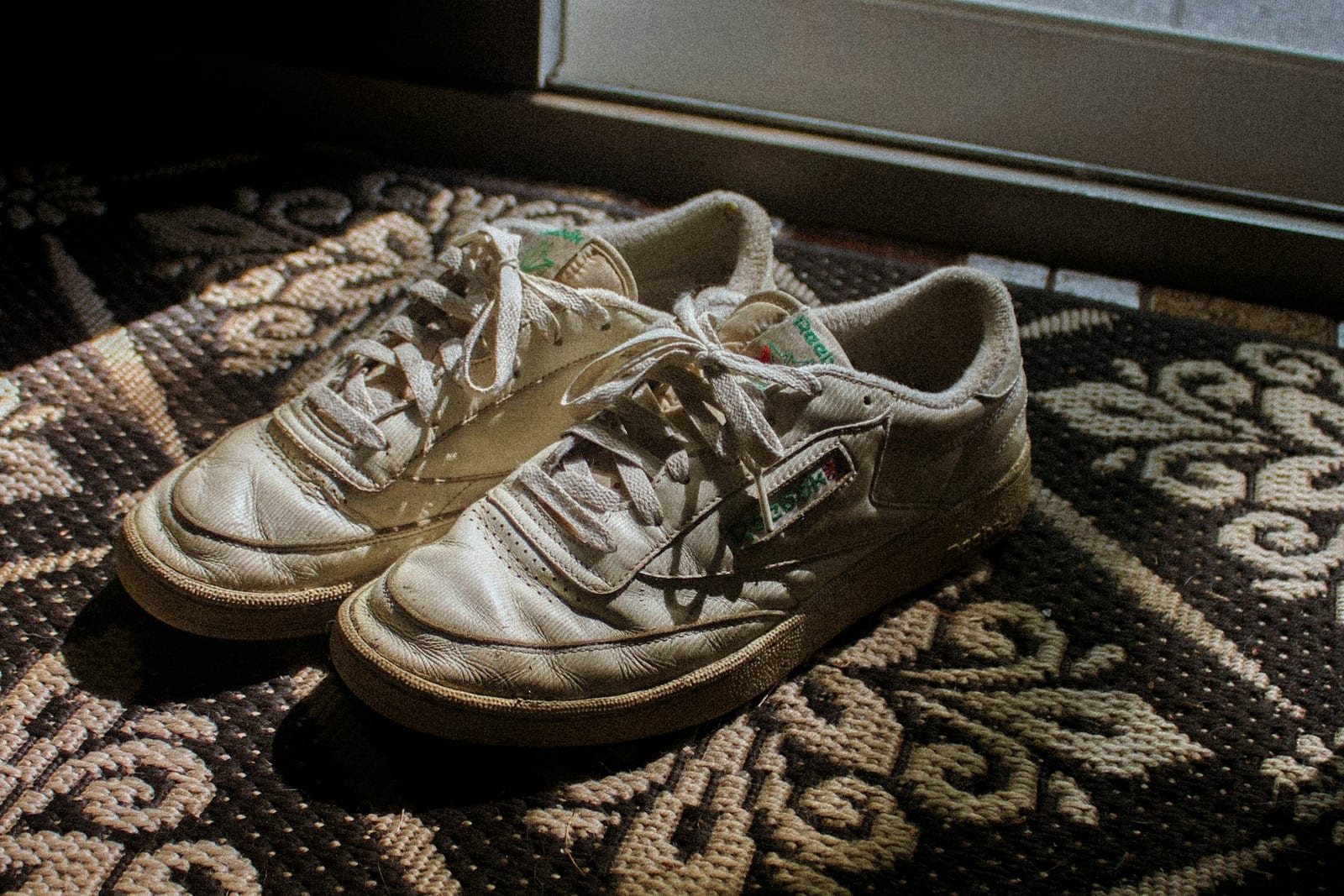
What a shoe actually records. The crease across the toe sits where the foot bends and deepens with every step, so a deep crease on a shoe with a clean sole is a shoe worn a great deal indoors. The outer back corner of a heel wears first on most people, and a heel worn flat on one shoe and not the other belongs to someone who walks unevenly, which is a fact about walking and nothing more. I do not read a gait as a diagnosis, and neither should you. A lace still knotted on a shoe that has been taken off is a shoe pulled on and off without untying, a habit of years. Dried mud on the welt is soft ground since the last clean. A scuff on the top of the toe rather than the tip is a toe that has been under something: a bar-stool rail, the underside of a desk, the pedal of a bike.
Choice under constraint
The careless reader loves a free choice, because a free choice can be made to mean anything. I prefer the choices people did not make. A hi-vis vest is worn because something requires it, and the something is more interesting than the vest: a site, a bike, a warehouse, or a dog walked before dawn. A lanyard with its badge turned inward belongs to someone who has learned to hide a name, which is a habit of the office rather than a trait of the soul. A coat too big across the shoulders with its sleeves turned back once was bought for someone else, bought to last, or inherited, and the state of the lining will usually tell you which. A uniform tells you a job and tells you nothing about the person except that they were at work, which, given the hour in the photograph, is often the whole case.
So before you read a garment as a preference, ask who chose it and what the alternatives were. A school jumper was chosen by a school. A branded fleece was chosen by an employer. The one pair of trousers with the knees gone may be the only pair the person owns, and that is a constraint too, one I decline to turn into a verdict.
The traps
There are five, and they are the same five every time. The careless reader turns a garment into a conclusion about a person's health, their pregnancy, their religion, their sexuality or their origins. Cloth carries none of those. It carries what was done to it. A reading that claims otherwise is a prejudice holding a magnifying glass, and I will not sign it. The sixth trap is money. An expensive coat says that money was spent on a coat, once, by someone. A very expensive coat worn to threads says the opposite of wealth: it says care, and ten winters. When a photograph makes you want to write rich or poor, write instead what you can see, which is a coat and the ten winters.
The last trap is newness. Everything crisp, every crease pressed, no wear anywhere, is either a person at the start of something or a scene dressed for the camera, and the room will tell you which. The Bureau once published a flat with two full mugs of tea on the table and a kettle whose cord was still in its factory coil; the mugs were a pose and the kettle gave them away. Clothes can be dressed the same way. When nothing has happened to any of it, nothing has happened yet.
What cloth will tell you, and what it will not
It will tell you which hand works, which shoulder carries, which side faced the sun and roughly for how long. It will tell you what someone kneels on, leans on and reaches for, and whether a shoe is pulled on in a hurry or laced with care. It will tell you when a garment was chosen by someone else. It will not tell you a person's temperament, their worth, or any of the five things above, and the moment you find yourself writing one of those down, go back to the garment and find the mark you skipped. The same rule holds for a cup, for a colour and for a whole room: one mark is a rumour, two that agree are a reading, and the reading stops where the marks stop.
Today's photograph has somebody's day in it. Find the wear before you find the label.