
October 20, 2026
The Bureau
“You see, but you do not observe.”
Sherlock Holmes to Dr. Watson, 1891
Daily Holmes is the practice of that difference. One photograph. Three minutes. Every morning.
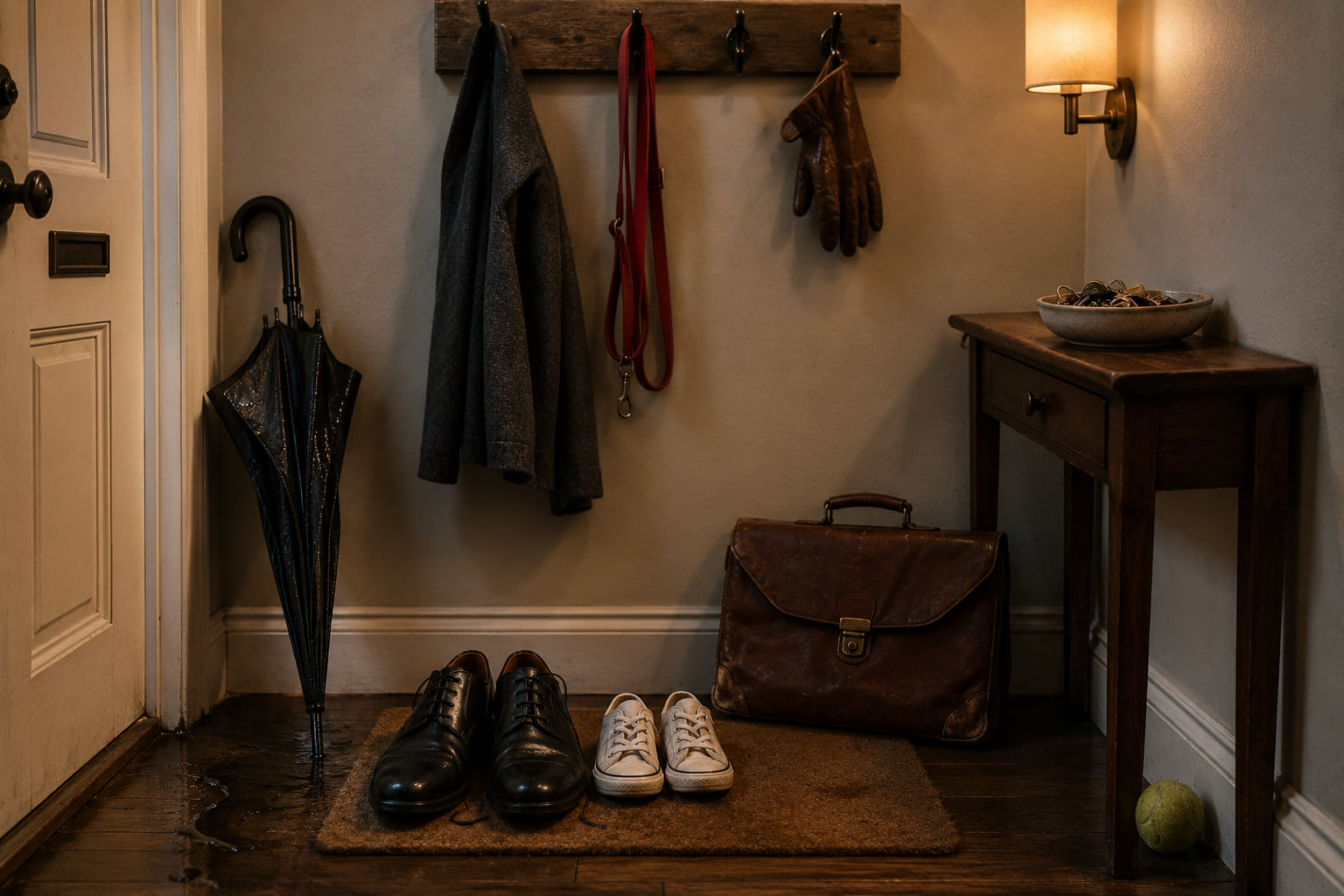
Every morning one photograph reaches the Bureau: a desk left in a hurry, a kitchen that pretends to be tidy, a phone screen caught mid-sentence. Someone lives inside that frame. Their habits, their worries, their small vanities sit in plain sight, waiting for a trained eye. One case a day. No gore, no tricks, no trivia. Just the quiet discipline of noticing, and the nerve to say what you noticed out loud.
The file on the Bureau
What
A free daily deduction game: a daily case file for people who read rooms.
Cadence
One new case at midnight. No file is opened twice.
Formats
Fifteen, in three kinds: find it, decide it, read it.
Verdict
AI-scored out of 100. Evidence and logic earn; luck does not.
Publisher
Offbeat Tech, LLC · one person, evenings and weekends.
How the Bureau works
01
Study the scene
One photograph arrives each morning. Zoom in close, drop your pins, and trust nothing at first glance.
02
Make your case
Write your deduction in your own words, or work the evidence in one of fifteen investigation modes: mark it, match it, put it in order.
03
Face the verdict
An AI examiner scores your case the way a mentor would: credit for evidence, credit for logic, nothing for lucky guesses.
Fifteen ways to read a photograph, from free-written deductions to marking, matching and ordering. Meet the modes.
The training room
Between cases, the Bureau keeps a training room. The Clue Museum puts a photographed scene in front of you and lets you tap any object to see what a detective reads there, and why. Around it sit the field notes: articles on the craft of seeing, from Holmes's methods to Kim's Game. Sharpen your eye in Training.
The Common Room and the standings
When your case is closed, the Common Room is where investigators compare notes: read what others saw in the same photograph, see which clues the room found and which it walked past, and tip your hat to the deduction you wish you had written. Step into the Common Room.
The standings keep score without shouting: each day's sharpest readings by name, and a general board of form over each detective's last ten daily cases, so one lucky morning never tops it. See the standings.
Who's behind this
I'm Gursu, a solo dev. I built Daily Holmes because I got obsessed with the way we read rooms we have never been in. Walk into a new hairdresser, a coworker's desk while they were out, a stranger's kitchen at a party. You can't help it. You scan. I wanted a small daily game built on that habit. This is that.
I work on Daily Holmes alone, evenings and weekends, under the Offbeat Technology label (Offbeat Tech, LLC).
What the Bureau has built, what it is building, and a vote on what comes next are all on the roadmap.
Writing about the Bureau? The press kit is ready.
How a case is made
Most weeks, I shortlist a handful of photographs. Some are real interiors (photographed or licensed). Some are AI generated and tagged as such on the case page itself. I write the question, the hidden answer key, and the bonus facts a careful observer might catch. A vision model does a first pass to help me catch what I missed. I do the last edit before anything publishes.
The house rule
If a case ships with a flaw, and they sometimes do, the buck stops with me, not the model.
What the AI does, and doesn't
The AI grades your guess against the hidden answer key and writes you a few lines of feedback. It does not write the cases, choose the puzzles, or speak in my voice. The detective framing is mine. The scoring is the AI's.
When in doubt, trust your own read of the photograph over the model's reply. The model is helpful, not infallible.
Inspector membership
Some investigators want more than the morning case. Inspector membership opens every drawer in the building: every past case in the archive, played and scored any day; a second Streak Shield every week for the mornings life gets in the way; dictation on every case; and a report on how you read. It is also how the Bureau stays open: members pay for the photographs, the writing and the scoring.
Free players file their cases as Detectives; members read the Bureau as Inspectors. See what Inspectors get.
The daily case stays free. Always.
Get in touch
Email bureau@dailyholmes.com. I read everything.
Follow Daily Holmes on X, Instagram, TikTok, or watch the short films on YouTube, or use the contact page.
The day's file is open
Enough about the Bureau. A stranger's room is waiting.