
Visual deduction is drawing conclusions from visual evidence alone: you observe what a scene looks like and reason backward to what caused it. A stranger's desk, shelf, or room becomes testimony, and it rarely lies.
In "The Adventure of the Dancing Men," Holmes receives a series of drawings: stick figures arranged in rows, each one slightly different. To the client they are children's scribbles. To Holmes they are a cipher, and he cracks it by treating each figure as a letter. The story is a pure exercise in visual deduction: the information was visible to everyone, but only Holmes saw it as meaningful.
Visual deduction is the practice of extracting meaning from what you can see. It is the foundation of every Holmes case, and it is a learnable skill. This article covers what visual deduction involves, why photographs are the ideal training ground, and how to build the habit.
Try it before you read on
A kitchen counter at 3am
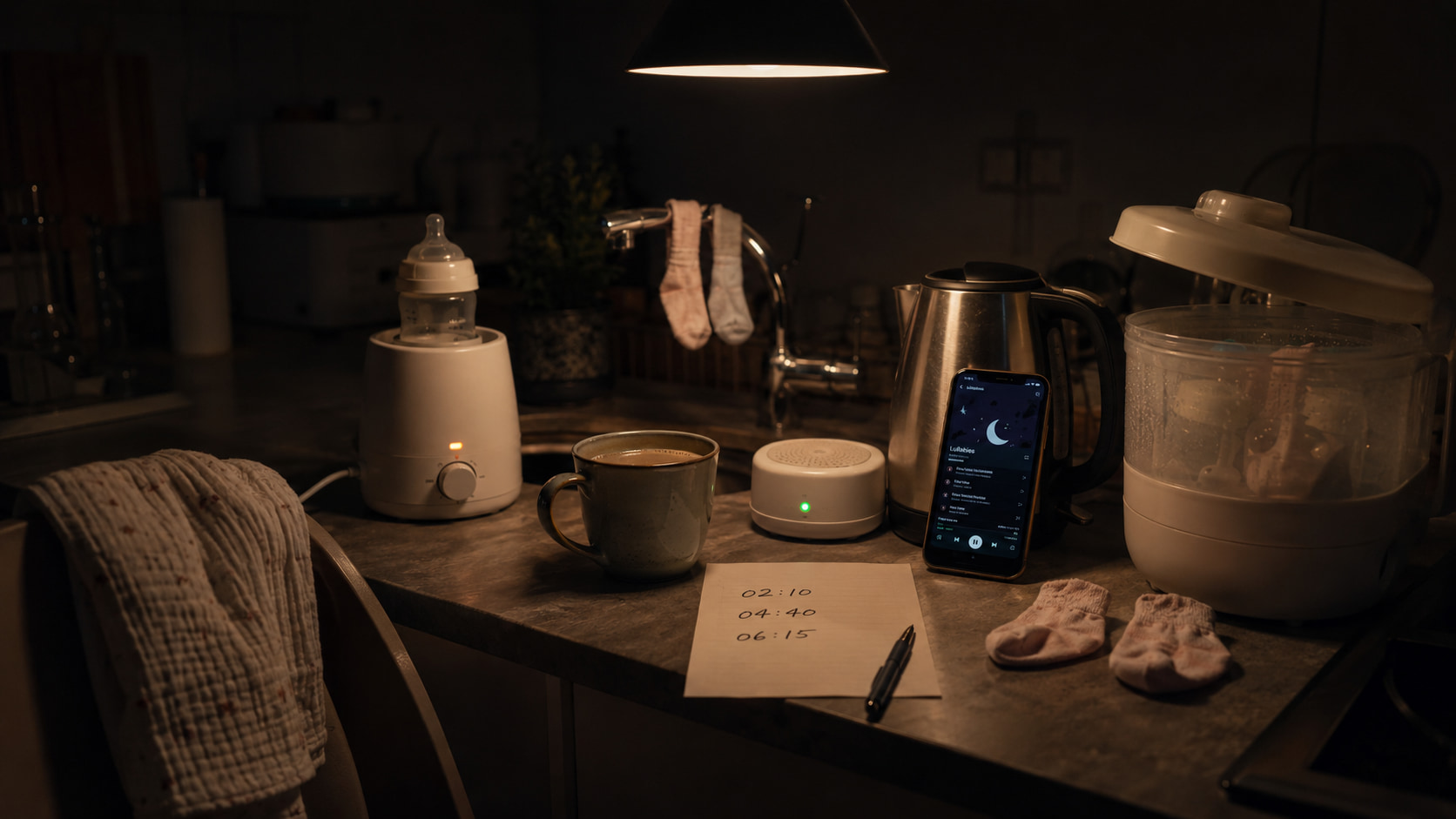
Seven marks on one kitchen counter. Each opens what a detective reads there, and why. This is the exact skill the rest of the article teaches.
Why visual evidence is special
Verbal evidence (testimony, statements, interviews) can be edited, curated, and lied about. Visual evidence is harder to fake. A person can tell you they are tidy, but their desk tells the truth. A room is an involuntary autobiography: it accumulates traces of daily behaviour that the occupant rarely notices and almost never deliberately arranges.
Holmes understood this instinctively. He trusted what he could see over what he was told. In The Boscombe Valley Mystery, a witness's verbal account contradicts the physical evidence at the scene. Holmes follows the physical evidence and solves the case.
The lesson
Objects do not have motives to deceive. People do.
This principle makes photographs powerful for deduction practice. A photograph of a stranger's space is a slice of visual evidence with no verbal context. You cannot ask the occupant anything. You have to read the room.
The layers of a scene
A room is not a flat image. It has depth, and the layers reveal different things:
- Structure. The room itself: size, layout, flooring, window type, ceiling height. These reveal location (apartment vs. house, urban vs. suburban), approximate value (rental vs. owned), and age (new construction vs. renovated vs. original).
- Furniture. The big items: desk, bed, shelving, seating. These reveal lifestyle choices, economic status, and how the space is used. A room with no couch and two desks is a workspace. A room with a couch facing a mounted TV is a living room optimised for watching.
- Objects. The small items: books, tools, bottles, electronics, clothing, food. These are the richest layer. Observation training focuses here because objects carry the most specific information about the occupant.
- Traces. Evidence of activity that is not an object: a stain, a wear pattern, dust (or the absence of dust), a handwritten note, a crumpled paper, a half-finished project. Traces are often more revealing than objects because they are unintentional.
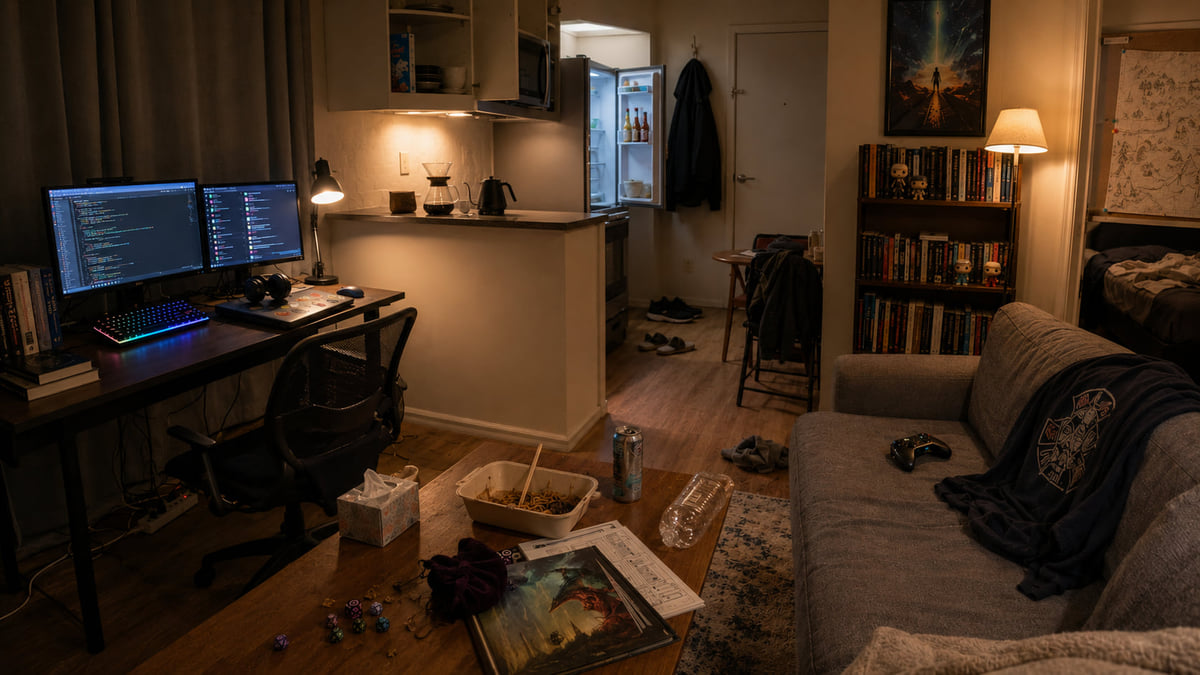
Reading a scene means working through these layers from broad to specific. Structure tells you where you are. Furniture tells you how the space is used. Objects tell you who uses it. Traces tell you what they were doing recently.
Reading clusters, not items
The biggest beginner mistake in visual deduction is treating each object as a standalone clue. A guitar means "musician." A stethoscope means "doctor." A passport means "traveller." But isolated objects are weak evidence. A guitar in a pawn shop means nothing about the shop owner.
The power is in clusters: groups of objects that point in the same direction. A guitar, a loop pedal, a microphone stand, and a collection of vinyl records form a cluster that says "serious musician." The same guitar next to a stack of textbooks and a university hoodie says "student with a hobby."
Holmes never stops at one clue. In A Study in Scarlet, his identification of Watson as a military doctor from Afghanistan depends on four independent observations (bearing, tan, wound, haggard face) all pointing the same way. One observation would be a guess. Four is a deduction.
What photographs teach that rooms do not
Real rooms offer all five senses. You can open a book and check the publication date, read a pill bottle label, or smell the kitchen. A photograph strips all of that away and leaves only what is visible at a distance. This constraint is a feature, not a limitation.
The constraint forces you to develop two specific skills:
- Edge-of-frame awareness. In a photograph, the edges often contain the most interesting clues: a partially visible book spine, a corner of a poster, an object just entering the frame. Your brain naturally focuses on the centre. Training yourself to read the periphery is a major observation upgrade.
- Inference from partial information. You cannot zoom in and read fine text. You have to infer from shape, colour, context, and position. This is harder than reading a label, and it builds a stronger reasoning muscle. When you can accurately deduce from a thumbnail, a full-resolution scene becomes easy.
A visual deduction walkthrough
Here is how to approach any Daily Holmes photograph, step by step:
- 10 seconds: global scan. What kind of space is this? Residential, commercial, institutional? What is the light doing? How ordered or disordered is it? Set the context.
- 30 seconds: layer sweep. Structure, then furniture, then objects, then traces. Do not interpret yet. Just inventory what you see.
- 30 seconds: cluster identification. Which objects group together? What patterns emerge? Are there contradictions? Note absence: what should be here but is not?
- 60 seconds: hypothesis and writing. Form your best-guess profile of the occupant. Generate one alternative explanation. Write the one that accounts for the most evidence. Be specific: occupation, approximate age range, lifestyle details, and recent activity.
Total time: about two and a half minutes. With practice, the scan and sweep phases compress and you spend more time on the interpretation and writing, which is where the learning happens.
From exercise to instinct
Visual deduction starts as a deliberate exercise: you consciously scan, categorise, cluster, and interpret. After weeks of daily practice, parts of the process become automatic. You walk into a new room and your brain flags the relevant details without being asked. You notice the absence of personal photos in an office, the dog hair on a couch, the specific brand of coffee on a shelf.
Holmes described this transition in The Sign of the Four: "I have trained myself to notice what I see." The training is not mysterious. It is repetition with feedback. A photograph a day. A written deduction. An AI that tells you what you caught and what you missed. Every method Holmes used started with this foundation: seeing what was always visible but never noticed.
Frequently asked questions
What is visual deduction?
Visual deduction is the practice of drawing conclusions about people, events, or situations from visual evidence alone. Instead of relying on verbal testimony or written clues, you observe what a scene looks like and reason backward to what caused it to look that way. Sherlock Holmes practised this when he read a person from their appearance or a crime scene from its physical layout.
How is visual deduction different from regular deduction?
Regular deduction (in the philosophical sense) can work with any type of premise, including abstract propositions. Visual deduction specifically starts with what you can see. The skill set overlaps, but visual deduction adds a perceptual layer: you must first notice the relevant details before you can reason about them. This observation step is where most people lose information.
What are the best visual deduction exercises?
Study a photograph of an unfamiliar room and write a profile of who lives there. Then check your reasoning against the facts. Daily Holmes provides this exact exercise with AI feedback. Alternatively, study a friend's desk or bookshelf (with permission) and describe what it tells you about their daily routine, then ask them how accurate you were.
Why are photographs better than real rooms for practice?
A photograph freezes a moment. You cannot open drawers, ask questions, or smell the room. This constraint forces you to extract maximum information from what is visible, which is exactly the observation skill you are training. Real rooms offer more information but also more distraction. Photographs isolate the visual channel.
Did Sherlock Holmes use visual deduction?
Constantly. Holmes read people from their hands, shoes, posture, and clothing. He read crime scenes from the arrangement of objects, the state of the ground, and the position of bodies. His most famous cases (A Study in Scarlet, The Speckled Band, Silver Blaze) all turn on visual observations that others overlooked.