
A picture puzzle hides its answer in a detail of the scene, and you find it by reading the question first, scanning the picture in a fixed order, and describing what you see before you decide what it means. The hardest step comes last: testing your favorite answer against the one detail that could break it, and a daily picture puzzle is an easy way to practise it.
Picture puzzles come in several kinds, from spot the difference to reading a stranger's room, but they all train the same two moves: noticing, then interpreting. This guide sorts the kinds, explains why the clue is so easy to miss, gives seven habits that find it, and ends with where to play one every day.
Five kinds of picture puzzle
| Kind | What you look for | What you do with it |
|---|---|---|
| Spot the difference | Changes between two versions of a picture | Find and mark them |
| Hidden object | Named items in a cluttered scene | Find them, often against a clock |
| Picture riddles | The one detail that breaks a story | Answer a question such as who is lying |
| Picture deduction | Traces a person or an event left behind | Infer who, what, or when |
| Photo geography | Signs, cars, clothes, buildings | Place the photo on a map or in a year |
The first two are about finding. The last three add a second step: once you have found the detail, you have to say what it means. That second step is where most wrong answers come from, and it is the part worth practising on purpose. A picture riddle might ask which of three people is lying about where they were; a picture deduction might ask who lives in a room, or what happened there last night. In both, the picture holds enough to answer, and nothing in it is labeled as a clue.
Why the clue is easy to miss
Your eye goes to the loudest thing first. Bright color, faces, text, and the middle of the frame pull attention, and a well-made puzzle often places its decoy exactly there. The clue that matters tends to be quieter, off to one side, and ordinary until you look at it properly.
You stop at the first story that fits. Once one explanation feels right, the eye stops looking for details that would contradict it, which is how a wrong answer can feel certain.
You look for things, and the clue is often a state. Not the cup, but whether it is dry inside. Not the toy, but how faded it is. Objects say what someone owns; their condition says what happened and how long ago. The psychology of missing what is in plain sight is covered in our guide to improving your attention to detail.
Seven habits that find the clue
- Read the question before the picture. The question tells you what counts as evidence. "Who lives here?" and "What happened last night?" send your eye to different corners of the same room.
- Scan in a fixed order. Split the picture into strips or quarters and give each one an honest look, edges and background included. Free looking keeps returning to the interesting middle and skips the corners.
- Name it before you explain it. Holmes did not see a man back from Afghanistan; he saw a tanned face and pale wrists. The description is evidence, the explanation is a guess about the evidence, and keeping the two apart stops a guess from hardening into a fact.
- Look at state, not just objects. Worn, faded, fresh, half used, switched on, put away. The state of a thing is usually where the time and the habit show.
- Count and pair. Things that come in sets show their gaps: a pair with one missing, a set with one member that does not match. Counting catches what a glance smooths over.
- Ask what is missing. Holmes's most famous clue, in Silver Blaze, is a dog that did nothing in the night-time. Ask what should be in the picture and is not.
- Try to break your favorite answer. Before you commit, look for the one detail that would make your answer wrong. If the most eye-catching object in the scene supports your theory, look twice.
The habits read as simple, and they are. What makes them work is using them in the same order every time, until the order runs on its own. For the method behind them, including how to read clusters of detail rather than single objects, see visual deduction 101.
Try the habits on a scene
A parked car, Monday morning
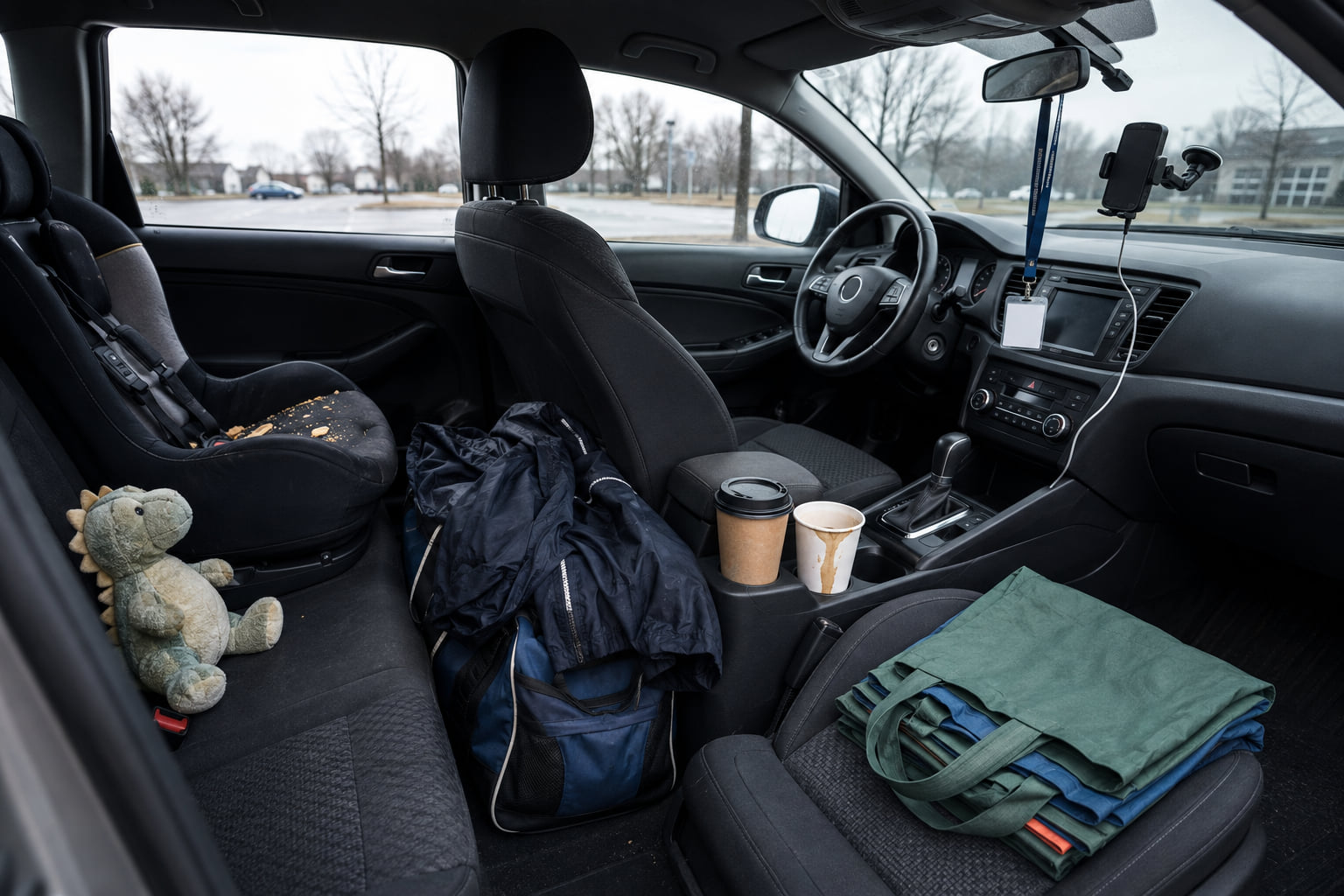
One parked car, seven marks. Look first and name what you see, then tap each mark to compare your reading with the detective's.
Where to play picture puzzles every day
Daily Holmes is the one we make: a new scene every midnight UTC and one question, usually about the person who lives there or about what happened. Several of its formats are picture puzzles in the strict sense: find the object that answers the question, hunt for the clues behind a claim, or spot the difference between two versions of a scene and say what the changes reveal. On other days you write your reading. The daily case is free, and every format is on the modes page.
TimeGuessr runs a daily challenge of five historic photos. For each one you place a pin on the map and choose a year, so cars, clothes, signs, and buildings become evidence. It is free in a browser, with an Android app.
For pure finding, several sites post a new spot the difference or hidden-object scene every day; we checked the main ones in our list of daily spot-the-difference games. They are good for the scanning habits above, even though the differences do not mean anything.
A five-minute routine
Pick one picture puzzle a day. Read the question, then give yourself one full minute of looking without answering, naming what you see in short phrases. Then answer, and before you submit, spend ten seconds looking for the detail that would prove you wrong. Afterwards, whatever your score, find the detail you missed and ask why your eye went past it. That last step is the one that makes tomorrow's puzzle easier.
Ready to practise?
A new visual case lands every morning. Study the scene and solve it in the day's format. Written deductions receive AI feedback; structured modes check your answer directly.
Play today's caseFrequently asked questions
What is a picture deduction puzzle?
A puzzle that shows you a scene and asks a question the scene can answer, such as who lives here or what happened, where the answer rests on details you have to find and then interpret. Unlike spot the difference, finding the detail is only half the task; the other half is saying what it means.
How do you find the clue in a picture puzzle?
Read the question before the picture, scan in a fixed order with the edges included, and describe what you see before you explain it. Check the state of things, not just what they are, count anything that comes in sets, ask what is missing, and test your answer against the one detail that could break it.
Where can I play a picture puzzle every day?
Daily Holmes posts a new scene and one question every midnight UTC, TimeGuessr has a daily challenge of five historic photos to place on the map and in time, and several sites post a daily spot the difference. All of them are free in a browser.
Do picture puzzles improve observation skills?
They improve the kind of looking you practise, especially when the puzzle shows you afterwards what you missed. Expect to get better at scanning a scene and noticing small details. Do not expect a general boost to memory or intelligence; the skill you train is the skill you get.